

From Truman Capote to social media: a guide to overcoming the fear of the blank page
By hand or on a computer. Paper or digital. In a notebook or on a typewriter. Plain, lined, or graphed. The blank page often represents the greatest terror for those trying to write . Some indulge in all kinds of rituals : absolute isolation , background music, seclusion in a remote hotel; the greatest solitude possible. “When you have something to say, you write it anywhere,” wrote Roberto Arlt in the prologue to The Flamethrowers.
The truth is that for many authors, this apparent initial obstacle was the trigger for great stories . Like a judo maneuver, they used the power of this blockage to their advantage and left their testimony in great books: The Luminous Novel by Uruguayan Mario Levrero is just one example. Novel Diary by Spanish author Sabina Urraca is another textual example that crystallized these battles between the desire to write and the impossibility.
Published by Bosque Energético—a beautiful independent publishing house whose catalogue is composed entirely of writers' diaries from diverse perspectives—this is the first publication in Argentina by this writer , one of the most prominent voices in contemporary Hispanic literature.
The first half was written in the Saniá house – that beautiful home located on the Costa Brava, the same place where Truman Capote secluded himself to finish In Cold Blood and where Leila Guerriero recently explored her influence there in The Difficulty of the Ghost – and the second half in the Usera neighborhood of Madrid , between 2022 and 2024.
Here he pours out all his ideas, digressions, and twists surrounding the writing of a novel and, almost without realizing it, ends up creating another book for the delight of the reader most interested in knowing what happens behind the scenes of the act of writing.
The diary format gives it the pace of a dizzying, testimonial novel. Here are all the small, great struggles of this writer, which could be identified with any other writer, against distraction, difficulty concentrating, and dispersion. Writing often appears like that white whale conceived by Herman Melville, who appears undaunted and unattainable.
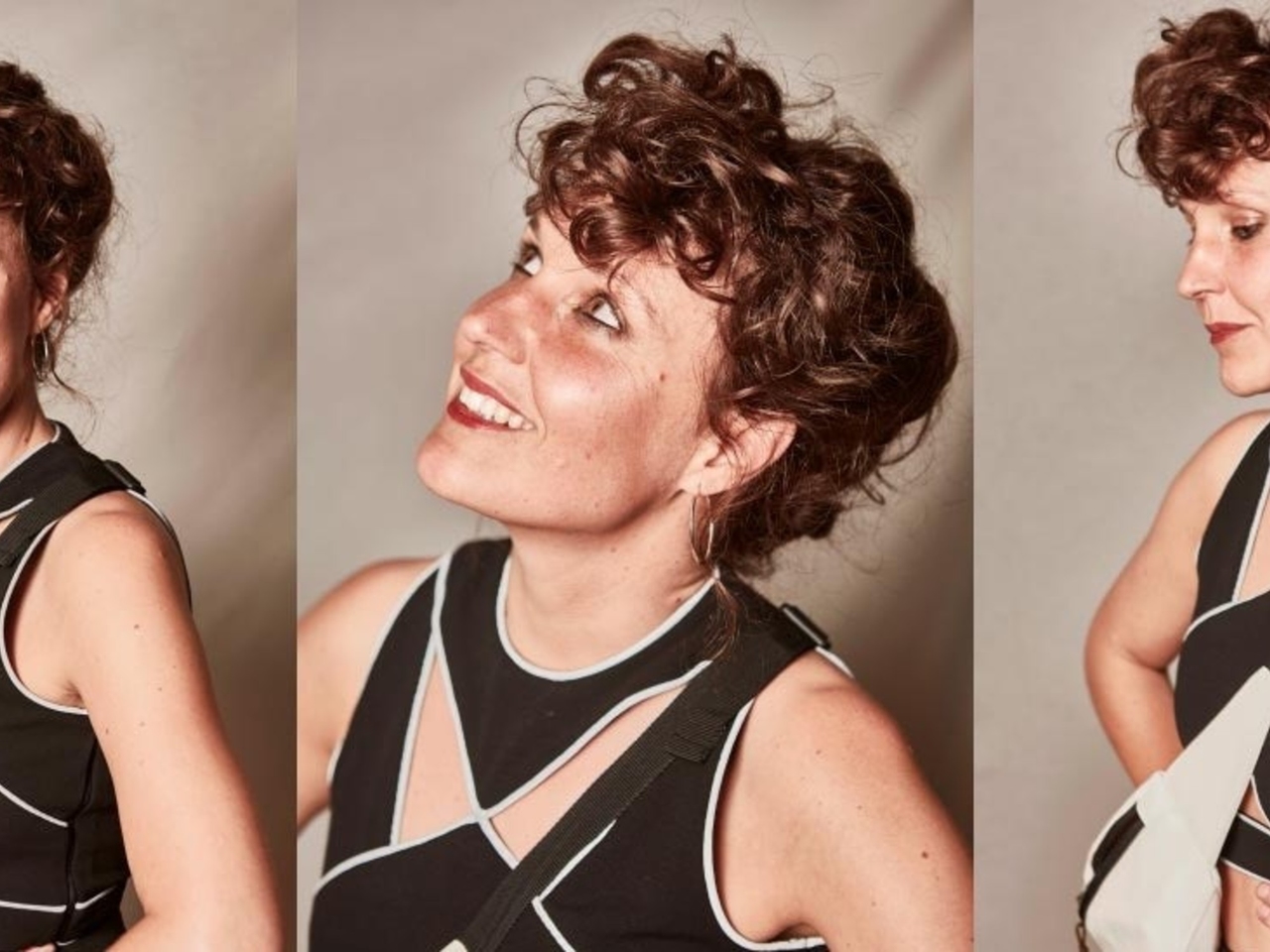
 Spanish author Sabina Urraca. Photo courtesy of the Spanish author.
She also jots down many parallel ideas—she calls them intrusive—that emerge in the middle of the process. Ideas for stories or other novels. She jots them down so she doesn't lose them , she says, although she also confirms that she won't write any of them, but that putting them down in writing helps her overcome the writing bottleneck that often plagues her.
Urraca hears phrases on the street and jots them down . She walks without listening to music. She even pays attention to what she wears. And she writes it down. She writes everything down just in case . Reflections on other topics slip in, such as social media (“My torrentiality on social media is almost never received as literature, but rather as an open door for strangers to talk to me”) and anecdotes about the ghost of Capote, who is said to haunt Saniá (“Tania tells me via WhatsApp that with the ghost you have to be clear, leave him a note explaining that I am a very suggestible person and that I need to sleep because, otherwise, after a few days, my soul will crumble”).
The writing process reads as chaotic and unbridled . Regarding the character she's developing, she says: "The book will be as messy as the protagonist's head. But even to create the illusion of disorder, you have to discipline yourself, structure, and organize the disorder."
She also returns frequently to the desire to write that has been with her for a long time. It started before she realized the possibility of becoming a writer, and when she was accumulating loose papers with writings that she wasn't sure what she would use them for: "Responding to a book isn't so easy or so immediate. A book, no matter how much it exposes, protects. Enough with little bits thrown into space," she says.
Novel Diary is an example of how a writer, or an artist in general, can overcome the apparent obstacle of creative block by using it to their advantage , even though the process, in many of its stages, is tortuous ("This novel works for me in the morning, just after waking up. Afterwards, it doesn't").
But above all, it's a beautiful compendium of meditations on what it means to write. For example, it powerfully and simply summarizes a mandate that invites those who have yet to dare to write. It's when they call her asking for the contact information of an author who had been dead for 20 years, so they can commission a text. She thinks and writes: "Write sooner. Write much sooner."
 Spanish author Sabina Urraca. Photo courtesy of the Spanish author.
Paraphrasing Luis Alberto Spinetta, at one point she notes that the next book will always be the best. That writing, almost like an endless phone call, never ends . Or rather, in her own words, in one of the most exquisite definitions she constructs about the act of writing itself: “It’s talking to a stranger on the other end of the phone. Talking to them like a madwoman: excited, emotional, revealing dark ideas, secrets, inventing. And then hanging up and wanting to die of shame. Twenty-five years later, still dying of shame .”
Novel Diary, Sabina Urraca (Energy Forest).

Clarin


